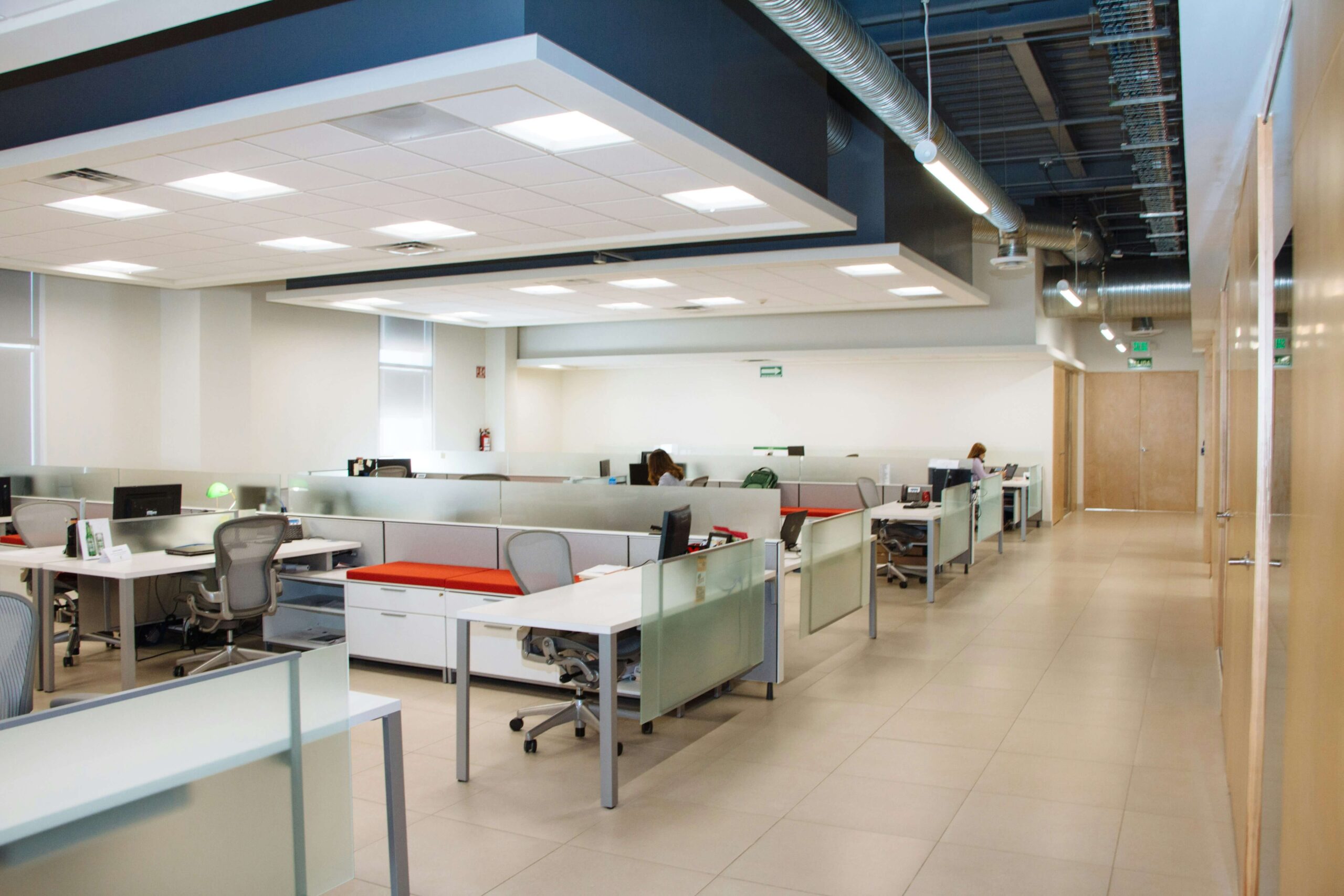

An office and laboratory moving company in San Diego coordinates commercial relocations involving office furniture, IT systems, laboratory equipment, storage, specialized assets, and outside vendors. A qualified mover should provide detailed planning, clear responsibility assignments, equipment protection, flexible scheduling, and onsite project management to reduce disruption and keep the relocation organized.
For businesses, laboratories, and technical facilities, a successful move is not simply about getting everything from one address to another. Instead, success depends on moving the right assets in the right sequence, coordinating internal teams and vendors, protecting equipment, and preparing the destination so operations can resume as planned.
All Moving Co. provides office, laboratory, equipment, IT-support, storage, and commercial relocation services throughout San Diego County, with local and long-distance moving options available.
Planning a move? Request a free commercial move estimate.
Office Moving vs. Laboratory Moving: What Changes?
Office and laboratory relocations share planning, packing, transportation, labeling, and destination-placement requirements. However, laboratory moves often involve more technical dependencies, specialized equipment, outside vendors, and stricter restart requirements.
| Relocation Need | Office Move | Laboratory Move |
|---|---|---|
| Primary assets | Furniture, files, workstations | Instruments, benches, specialized equipment |
| IT coordination | Often required | Often required |
| Vendor involvement | Sometimes | Frequently |
| Asset mapping | Important | Critical |
| Technical dependencies | Moderate | Often extensive |
| Scheduling priority | Business continuity | Research and operational continuity |
Many San Diego biotechnology and research organizations need both services at once. Therefore, one coordinated relocation plan can be more efficient than managing offices, laboratories, IT, equipment, and storage as separate projects.
What Should a Commercial Relocation Company Handle?
A commercial relocation company should coordinate planning, packing, asset labeling, transportation, equipment placement, building access, vendor scheduling, storage, and onsite project management when those services are included in the scope. For complex moves, responsibilities should be assigned before moving day so every task has a clear owner.
- Pre-move walkthroughs and inventory planning
- Packing, labeling, and building protection
- Furniture and equipment handling
- Transportation and destination placement
- IT and vendor coordination
- Temporary storage or staging
- Onsite project management and final walkthroughs
The key question is not simply, “What services do you offer?” Instead, ask who is responsible for each part of the project. A detailed scope should identify mover responsibilities, client responsibilities, and tasks that require qualified third-party specialists.
How All Moving Co. Plans Office and Laboratory Relocations
All Moving Co. approaches commercial relocation as a coordinated project rather than a single moving day. An onsite project manager can help organize schedules, communicate with stakeholders, and manage execution.
- Site walkthrough: Review access, elevators, loading areas, pathways, and restrictions.
- Scope and inventory: Identify furniture, IT assets, laboratory equipment, storage needs, and special handling requirements.
- Destination review: Confirm room assignments, equipment pathways, and destination readiness.
- Responsibility planning: Define tasks for movers, internal teams, manufacturers, and technical vendors.
- Packing and preparation: Organize labeling, protection, furniture breakdown, and equipment preparation.
- Move sequencing: Determine which rooms, departments, and priority assets move first.
- Transportation and placement: Deliver assets according to the approved sequence.
- Final walkthrough: Confirm placement and outstanding requirements.
What this means: the earlier critical dependencies are identified, the easier it becomes to control the schedule and reduce disruption.
How Do You Reduce Downtime During a Business Move?
Reducing downtime starts before moving day. A commercial relocation should sequence departments, equipment, IT systems, vendors, and destination setup around the organization’s operational priorities.
- Phased relocation
- Evening or weekend scheduling
- Department-by-department sequencing
- Priority asset identification
- IT and vendor coordination
- Destination readiness checks
- Clear room labeling and unloading order
Additionally, power, network access, plumbing, ventilation, loading access, elevators, and room assignments should be ready before critical assets arrive. Downtime is usually a planning problem before it becomes a moving problem.
What Should You Consider Before Moving Laboratory Equipment?
Laboratory equipment requires more planning than standard office furniture because instruments may have technical, environmental, manufacturer, utility, or calibration requirements.
Before relocation, review equipment dimensions, weight, sensitivity, manufacturer instructions, pathway clearances, disconnect and reconnect requirements, calibration needs, power or utility requirements, crating, destination placement, insurance, and vendor involvement.
For example, an instrument may be physically movable by the relocation team but still require an authorized technician for shutdown, reconnection, or post-move verification. Some assets may also require engineers, riggers, specialty carriers, or other qualified providers.
The goal is not to assign every task to the moving company. The goal is to make sure each task is assigned to the right qualified party and completed in the correct sequence.
Who Is All Moving Co. Best For?
All Moving Co. is best suited for organizations that need more than basic transportation, including corporate offices, biotechnology companies, research laboratories, technical environments, equipment-heavy businesses, and multi-department relocations.
It is also a strong fit for businesses needing temporary storage, phased moves, after-hours scheduling, or coordination between movers, IT teams, facility managers, and equipment vendors.
Best option for: organizations where timing, communication, equipment handling, and operational continuity matter as much as transportation.
When Might a General Moving Service Be Enough?
A specialized relocation approach is not necessary for every business. A small office with standard desks, chairs, boxes, and limited technical dependencies may be adequately served by a conventional commercial mover.
However, specialized planning becomes more valuable as equipment value, IT complexity, vendor involvement, building restrictions, or downtime risk increases.
What Does an Office or Laboratory Move Cost in San Diego?
The cost of an office or laboratory move in San Diego depends on the actual scope. Pricing may be affected by inventory volume, crew size, travel distance, packing, elevators, loading access, specialized equipment, storage, crating, after-hours work, and project duration.
Therefore, the most useful estimate comes from a detailed walkthrough rather than square footage alone. An onsite review can uncover tight pathways, staging limitations, access restrictions, or technical requirements that may otherwise be missed.
Schedule an onsite walkthrough for a detailed commercial moving estimate.
How Should You Compare Commercial Moving Quotes?
To compare commercial moving quotes, review the scope, exclusions, project management, equipment responsibilities, storage, IT coordination, schedule, and insurance—not just the total price. Two estimates can look similar while assigning very different responsibilities to the mover and customer.
| Compare | What to Ask |
|---|---|
| Scope | What services are included? |
| Exclusions | What is not included? |
| Equipment | Who prepares specialized assets? |
| Project management | Who is responsible onsite? |
| Storage | Is temporary staging available? |
| IT | Who manages disconnect and reconnect responsibilities? |
| Schedule | Are evenings or weekends available? |
| Insurance | What coverage applies? |
A lower initial estimate does not necessarily mean a lower total project cost if important services or responsibilities are excluded.
Common Office and Laboratory Moving Mistakes
- Choosing solely on price
- Starting without a complete inventory
- Skipping destination-readiness checks
- Involving technical vendors too late
- Leaving responsibilities unclear
- Ignoring elevators, docks, or parking restrictions
- Moving IT without a restart sequence
- Using inconsistent room or equipment labels
- Assuming specialized equipment is standard freight
What this means: a move can be physically successful and still create operational delays if equipment arrives before rooms, utilities, IT systems, or technical vendors are ready.
Office and Laboratory Moving Throughout San Diego County
All Moving Co. supports commercial and laboratory relocations throughout San Diego County, including San Diego, Carlsbad, Oceanside, San Marcos, Encinitas, Escondido, La Jolla, Chula Vista, Del Mar, Poway, Vista, and surrounding communities.
Local commercial moves may involve elevator reservations, loading restrictions, parking coordination, building-management requirements, or limited work windows. Additionally, temporary storage and phased scheduling can help when origin and destination timelines do not align.
Is a Specialized Office and Laboratory Moving Company Worth It?
A specialized office and laboratory moving company is usually worth considering when a relocation involves sensitive equipment, multiple departments, IT dependencies, outside vendors, or strict downtime limits. The primary value is coordination and risk reduction rather than transportation alone.
For a straightforward office move, specialized project management may be unnecessary. However, as operational complexity increases, a structured relocation plan becomes more valuable.
What Should You Ask Before Hiring a Commercial Mover?
- Have you completed moves involving facilities similar to ours?
- Who will manage the project onsite?
- What is included and excluded?
- Who handles specialized equipment?
- Can you coordinate with IT and equipment vendors?
- How will assets and destination rooms be labeled?
- Can you work evenings or weekends?
- Is temporary storage available?
- What insurance applies?
- How are schedule changes handled?
The quality of these answers often provides more useful insight than marketing claims alone.
Frequently Asked Questions
How far in advance should we plan an office or laboratory move?
Planning should begin as early as practical, especially when equipment vendors, IT systems, building access, storage, or several departments are involved. Larger and more technical relocations generally require more advance coordination.
What is the difference between office movers and laboratory movers?
Office movers primarily handle furniture, files, workstations, and business equipment. Laboratory relocations may also involve scientific instruments, technical vendors, utilities, specialized preparation, equipment sequencing, and restart requirements.
Who disconnects and reconnects laboratory equipment?
It depends on the equipment. Some assets may be handled by internal teams, while others require manufacturer-authorized technicians, electricians, plumbers, engineers, or specialty providers. Responsibilities should be documented before moving day.
Can commercial movers work evenings or weekends?
Yes. Evening, weekend, and phased scheduling can help reduce disruption to employees, customers, laboratory operations, or production when the project is planned around business requirements.
How do we get an accurate commercial moving estimate?
Start with a detailed inventory and walkthrough. The mover should understand both locations, access conditions, packing requirements, equipment needs, storage, scheduling, vendor involvement, and specialized handling before finalizing the scope.
Plan Your San Diego Office or Laboratory Move
The best place to begin a commercial relocation is with the scope. Identify what is moving, what requires specialized handling, which departments and vendors are involved, when each area must be operational, and what conditions must be ready at the destination.
All Moving Co. works with businesses, laboratories, facility managers, and operations teams on commercial relocations throughout San Diego County and beyond.
Get a free estimate or request a second opinion for your upcoming commercial move. Call All Moving Co. at (619) 975-4355.